
It is happening again.
Germany's third World Cup humiliation in a row has exposed the strange, fearful complacency at the heart of the national game.
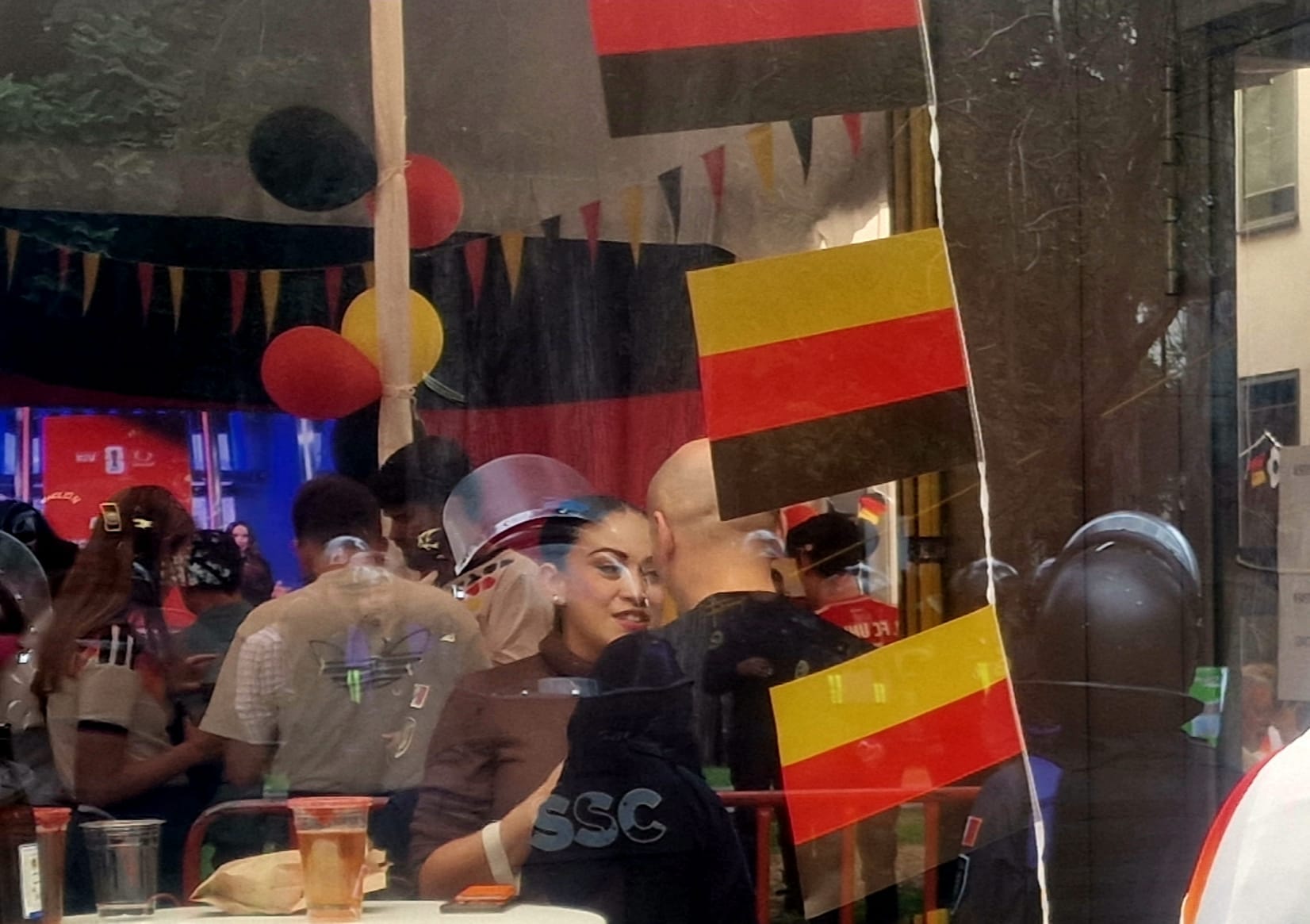
At the German Embassy in Mexico City on Monday, the thunder arrived right on cue.
All afternoon, a sense of foreboding had been brewing in Polanco. Outside, dozens of riot police were assembling to ward off an environmentalist protest against a Swiss-German-funded ammonia factory in Sinaloa. Inside, a motley crew of diplomats, expats and hacks watched on in horror as Germany toiled against Paraguay.
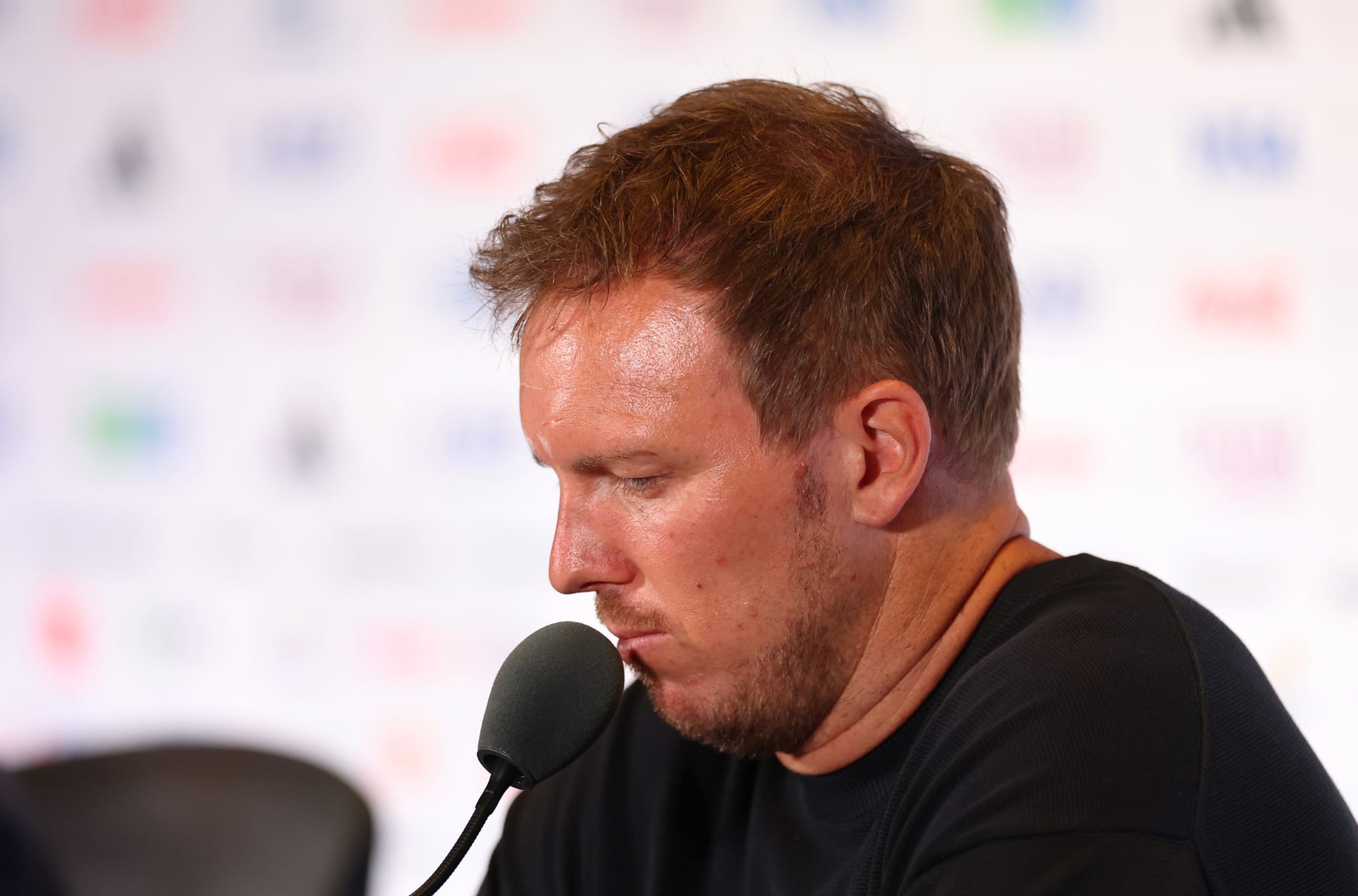
Just after 5pm, the skies opened, the thunder cracked and Jonathan Tah smashed his penalty over the bar. A few minutes later, Germany were out of the World Cup and even in the heatwave back home, the summer was officially declared a damp squib.
Hello darkness, my old friend. By now, after three World Cup humiliations in a row, everyone knows the drill. Fire up the anger, divvy up the buzzwords. Stefan, you take Vollkatastrophe. Lothar, how about konsequente Aufarbeitung? Who wants the soft youth of today and the decline of old values like Gier ,Wille and Ehrgeiz? Oh, and has anyone got a number for Didi Hamann?
It was all supposed to be so different, of course. Ahead of this tournament, there was some cautious hope that Germany could, if not win, then at least return to the top table. Some even wondered whether this could be bigger than football. After a respectable run at the home Euros in 2024, the Germans seemed to be behind their team again. Even the shirt was a throwback to 1990 and 2014, moments when on-field success chimed with a mood of confidence and national optimism.
Instead, we are back to square one and Euro 2024 now looks less like the start of a new era, and more like the exception that proves the rule. Germany have won just one knockout game at a major tournament since 2016. They have not reached the last 16 of a World Cup since 2014. This latest defeat is, as kicker put it, “a damning indictment of German football”. And not for the first time, the World Cup seems a handy metaphor for a nervous, divided nation.
Nothing summed that up more than the unedifying saga over Bastian Schweinsteiger’s comments ahead of the second game. Asked what he expected from Germany’s opponents, the Ivory Coast, the former Bayern Munich star fell back on lazy stereotypes: “They will be a bit African football, a bit unorthodox, a bit wild, not always so defined by tactics,” he said.
If the comments themselves were bad enough, the reaction was worse. While some, such as Andreas Bock in 11Freunde, offered measured and precise critiques, much of the fallout descended into partisan honking and wilful obfuscation. “I was talking about football, not people,” protested Schweinsteiger. His employer ARD insisted they saw “no racism” in his remarks and gently gaslit Ivory Coast manager Emerse Faé for daring to suggest otherwise.
In the end, it was left to German players with African roots such as Hans Sarpei and Gerald Asamoah to patiently explain the difference between calling someone a racist and calling them out for recycling racist clichés. Those efforts fell on deaf ears among much of the pundit corps, who firmly closed ranks around Schweinsteiger. Perhaps the lowest point came when Jürgen Klopp broke off an interview on camera, spitting sarcastic vitriol at a Deutsche Welle reporter and suggesting, bizarrely, that it was typically German to ask someone in football a question about racism.
The reaction said plenty about the tone of German coverage of this World Cup, much of which has rotated around Klopp and Thomas Müller in their role as pundits for MagentaTV. The duo were quite a coup for the pay-per-view channel: the two most famous voices in German football, guaranteed to bring zinging one-liners, gleaming white teeth and subscriptions. Unfortunately, they didn’t bring much else. When Klopp was asked about Schweinsteiger, he stormed off in a huff. When he accidentally said something mean about Nagelsmann, he quickly issued a grovelling apology. Rule number one for German football royalty: don’t attack your own.
It is difficult not to wonder if all this chummy complacency is part of the issue. After the 2018 and 2022 World Cups, there was a general consensus that the national team had lost touch with its fans. The reaction was largely populist: Scrap the “Die Mannschaft” branding, get rid of Oliver Bierhoff, install the people’s champion Rudi Völler in his place. That may have burst one bubble of self-satisfaction, but it has arguably created another.
And it is not just at DFB level. Perhaps the worst thing about Schweinsteiger’s comments was how plainly wrong they were. Anyone who had spent more than a hot second of YouTube clips watching the Ivory Coast play could never have reached suched a conclusion. Yet despite his formidable football brain, Schweinsteiger ultimately had nothing to offer beyond a deeply problematic cliché. Worse, that was all that was expected of him. Like Klopp and Müller on Magenta, he was hired for recognisability, not research.
It is hard not to draw a comparison to performances on the pitch. What were Schweinsteiger’s comments if not the pundit’s equivalent of pinging cross after cross towards a well-drilled defence and hoping that at some point, the ball will go in of its own accord? Nagelsmann, too, has been criticised for not conducting thorough research into either opponents or his own pool of playing talent. Philipp Lahm’s scathing assessment after the Paraguay defeat was that Germany have “no idea how we want to play”. They are, you might say, a team “not so shaped by tactics”.
Many are now calling for Nagelsmann’s head, and probably with good reason. But this World Cup was not lost because Joshua Kimmich played at right back, Yann Bisseck wasn’t picked or Manuel Neuer was hauled out of retirement. Just as in 2018 and 2022, the issue is much more fundamental. A change of coach may be inevitable, but it will take more than simply hiring Klopp to fix the mess.
Some have already compared Germany to the England of old. A team tormented by the mix of entitlement and fear that plagues every grand football nation in a downward spiral. The good news is that Germany have been here before. The bad news is that it is a long road back.
Perhaps the most damning indictment is that nobody is surprised anymore. There were no tears at the embassy. No devastation. A few wry smiles and the odd shrug and then they all filed out before the protesters arrived. Was this worse than Russia, than Qatar? Maybe. But in the end, this World Cup was always going to be somebody else’s party.
Played in Germany is completely free to read at the point of publication. If you would like to support my work, please consider taking out a paid subscription for full archive access. Alternatively, you can buy me a coffee via the link below.