
Dr Jürgen and Mr Klopp
Jürgen Klopp is back and ready to take on the biggest challenge of his career as new Germany manager. So why is he already threatening to leave?
“Wer Jürgen holt, kriegt ihn.”
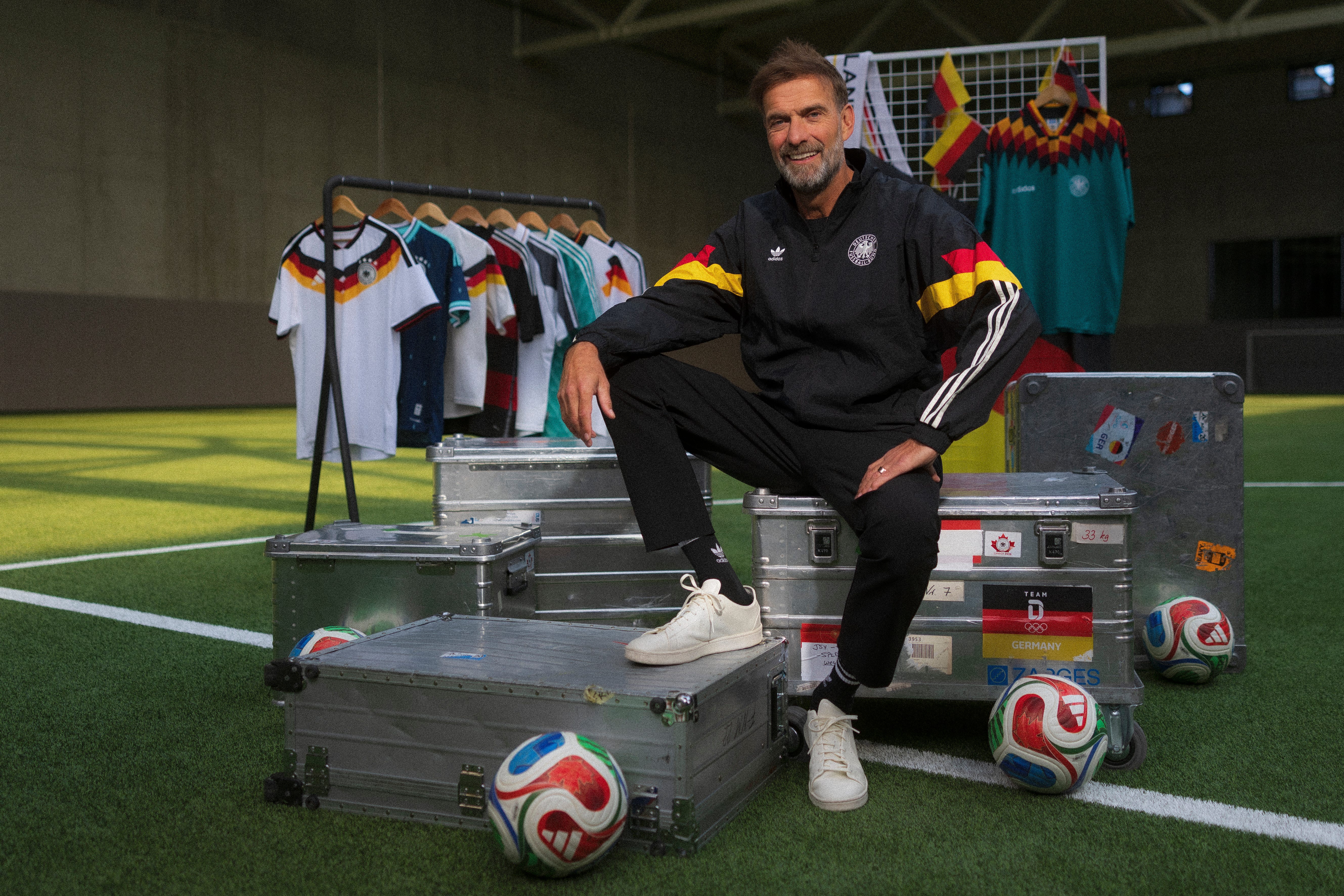
They wanted him, and now they’ve got him. After three weeks of negotiations, the German Football Association (DFB) finally have their man. Jürgen Klopp is back home, and if his unveiling as Germany manager last Friday is anything to go by, we are in for quite the ride. As Klopp himself put it: If you sign Jürgen, then Jürgen is what you will get.
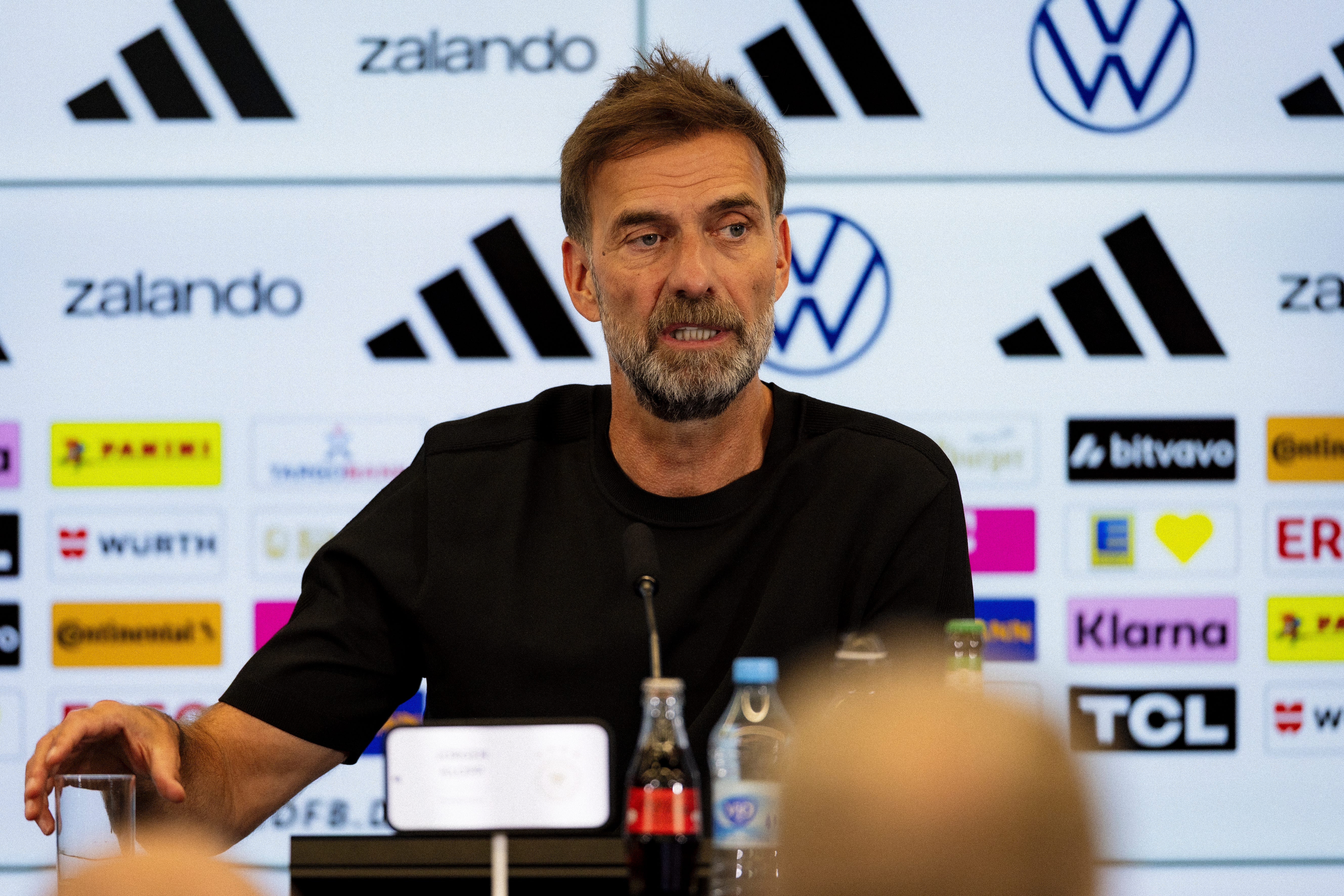
So what have we got? At the DFB HQ in Frankfurt on Friday, both sides of Klopp were on full display. On the one hand, the irresistible charm of Germany’s greatest modern football coach. On the other, the paranoid vanity of the modern superstar manager. Klopp came out swinging, beginning his tenure with a press conference performance for the ages. At the end of it, it was hard to decide whether he was “The Normal One” or a raving megalomaniac. Perhaps, with him, it is always a bit of both.
In many ways, this was Klopp at his best. Two years after his departure from Liverpool, the 59-year-old was gregarious, energised and hitting all the right notes. He heaped praise on his predecessors, his new employers and his newly assembled coaching team. He waxed lyrical about how much the job meant to him. He was honest, self-aware and funny, poking fun at himself, the press, Bayern Munich and anyone else who came into view.
Most of all, he showed that he was up for it. The answers often lasted minutes. The smile was in full gleam. At one point, he waved his hands so energetically that he almost knocked the microphone off the table. It is 11 years since Klopp left Borussia Dortmund, over a decade since he has given a full press conference in his native, south-west German drawl. He was back home and he was having fun, evidently keen to give Germany the same injection of life he had once given Dortmund and Liverpool.
“I want people to come out of the stadium when we play and say ‘wow’,” he said, promising the same high-octane football that has defined his managerial career so far. He spoke of feeling “a responsibility to the fans” and mused on the power of football to revitalise the whole of society: “If we win the World Cup, then maybe your neighbour doesn’t seem like so much of an arse anymore.”
This, in the end, is why they wanted Jürgen. In recent years, German football has assumed a fatalistic belief in its role in some wider decline. It has become normal to draw a direct line between troubles on the pitch and malaise off it, from growing political polarisation to a stagnating economy. Klopp has always understood that to manage a football team is also to manage a community, a narrative, a set of identities. Rightly or wrongly, Germany now sees itself as the sick man of the European game. If anyone has the cure, it is Dr Jürgen.
But then there is also Mr Klopp. For all his charm, Klopp has always had a tendency to lash out and, worse, to kick down. Fourth officials, translators and interviewers have all been on the end of it over the years. On Friday, he launched a preemptive attack on the entire German media, beginning his press conference with a threat to leave the job if he felt mistreated. “If you think I’m shit, then I will go,” he said. “If you behave badly and don’t leave my family in peace, I will go.”
This is Klopp the power person. The man who, by his own admission, has been able to “do what he wants” in his professional life for almost a decade. That doesn’t just mean picking his teams and setting his wage demands. It means having complete control of the narrative. As much as Klopp pointed to others such as Hannes Wolf, Rudi Völler and Sven Bender as part of the DFB’s overhaul, it was clear that this will be the Klopp show. If you want Jürgen, you get him.
The DFB have already had to swallow a lot to get him, donating a million euros to Red Bull’s charitable foundation and promising three international games in Leipzig to prise him away from his previous job. Among those in the front row on Friday was also Klopp’s long-time agent and PR advisor Marc Kosicke, who will now join the federation as an external consultant. “It was made clear to us that they were only available as a package,” said DFB president Bernd Neuendorf of Klopp and Kosicke, adding that the latter would have access to “every part” of the DFB, including the president’s office.
All of which has raised eyebrows. “The DFB have handed Klopp more power than any other Germany manager in their history,” wrote Kicker this week. And while most would agree that the system needs radical change, not everyone is a convinced Kloppista.
Played in Germany is completely free to read at the point of publication. If you would like to support my work, please consider taking out a paid subscription for full archive access. Alternatively, you can buy me a coffee via the link below.
The 59-year-old is, after all, a more divisive figure than he once was. His decision to work for Red Bull infuriated traditionalists and organised fan groups in Germany, who see the drinks company as a fundamental threat to fan culture and supporter-led governance. It proved the final death knell for Klopp’s one-time image as a straight-talking man of the people, which was already suffering under a mountain of brand endorsements, TV adverts and expensively brightened teeth. Far from welcoming him as the Messiah, many in Germany fear Klopp may prove little more than a timely PR coup.
Perhaps that explains his spiky opening gambit on Friday. Klopp has had to win over sceptics in his previous jobs, but this is different. Charm and flattery worked wonders in the cultish, partisan club environments of Dortmund and Liverpool. It may prove less effective now he is one of the most scrutinised figures in German public life.
His answer to this has been to go on the attack. “I am not working against you, I am working for you,” he sniffed at the press on Friday. With that, he echoed a refrain which has become ever more common among leading figures in German football: that Germany is a nation of Nörgler, naysayers and Debbie Downers who do nothing but criticise. His boss, DFB CEO Hans-Joachim Watzke, had expressed the same thought just minutes earlier when he sneered that “we are used to everything being seen critically in Germany”.
At best, this attitude is narcissistic and insular - as if, in France, Spain and England, nobody ever criticises the national football team. At worst, as some have argued, it betrays a very warped idea of the role of an independent media in a free society.
In truth, though, it felt most like a manager getting his excuses in early. The media are not beyond reproach and it is entirely reasonable of Klopp to ask for good-faith, level-headed reporting. Yet by picking that fight so early in his tenure, it felt like Klopp was trying to give himself a backdoor exit. If it all goes wrong, it won’t be his fault. It will be the media. The naysayers. The very idea of German society.
In his heart of hearts, Klopp must know that won’t work. In this job, he cannot control the narrative as he could elsewhere. In the end, it will come down to whether he is successful or not. As he himself put it on Friday: “Success is performance in relation to expectation.”
The expectations are huge. And as much as he may point the finger at others, Klopp knows he is all in. Success or failure in this job will be the ultimate test of his career, the difference between being a great German manager and the great German manager.
“Jürgen Klopp doesn’t have a career after the German national team,” he said on Friday. “This is the high point of my professional life and I am going to give it everything.”
Played in Germany is completely free to read at the point of publication. If you would like to support my work, please consider taking out a paid subscription for full archive access. Alternatively, you can buy me a coffee via the link below.